“which breed” search results (2000)

Yemeni coffee grains of China Coffee Network are small and heavy.
Yemeni coffee originated from Arabian coffee trees hundreds of years ago, all of which are produced in areas above 3000 feet above sea level. For hundreds of years, the unique planting and production methods of Yemeni coffee have remained almost unchanged. The seedlings of Yemeni coffee trees are first cultivated in nurseries and then transplanted to high elevations. Pesticides and fertilizers are not used in the breeding process. Mature coffee beans are naturally dried on coffee trees and shelled by stone mill.
2015-11-20 China coffee net Yemen small heavy from hundreds
Soft, slightly sour Salvadoran coffee beans with beautiful sweetness
El Salvador boutique coffee is concentrated in the volcanic rock producing areas of Santa Ana in the west and Charantanan fruit in the northwest. In recent years, the top 10 cup tests are almost entirely from these two producing areas, with an altitude of about 9-1500 meters, mainly bourbon (68%). Followed by Pacas (29%), mixed-race Pakamara, Dulaai and Kaddura accounted for only 3%. The coffee harvest season has been held since November.
2016-07-01 Soft slightly sour okay sweetness El Salvador coffee beans boutique coffee
Talking about "Arabica" again
Arabica is synonymous with high-quality coffee, accounting for more than 70% of the world's total output, but innocent farmers do not know how big the scope of "Arabica" is.
2014-07-24 Coffee knowledge Arabica coffee types coffee encyclopedia
Introduction to the characteristics of the manor producing area of Indonesian civet coffee with special flavor
It is widely distributed in tropical and subtropical regions of China, including southern Gansu, Sichuan, Shaanxi Qinling, southern Anhui, Zhejiang, Fujian, Jiangxi, Hubei, Hunan, Guangdong, Hainan, Guangxi, Guizhou, Yunnan and low-altitude areas southeast of Xizang. Xizang's Chayu, Bomi, Motuo, Linzhi, Milin, Cuona and other places. Previous literature records (Shou Zhenhuang et al., 1964) in Jingjiang, Jiangsu
2016-08-25 Special flavor Indonesia musk coffee taste manor producing area characteristics introduction
The Origin of the name mandheling in Manning's Coffee Culture
Manning is not the name of the producing area, the place name, the port name, nor the name of the coffee breed. How did it get its name? In fact, it is a phonetic error of the mandheling people in Mandaining, Indonesia. During the Japanese occupation of Indonesia during World War II, a Japanese soldier drank mellow coffee in a cafe, so he asked the shopkeeper the name of the coffee, and the boss mistook him for asking where you were.
2015-01-15 Mante coffee culture mandheling name origin mante not
The Origin of the name mandheling of Indonesian Mandaining Coffee Bean
Manning is not the name of the producing area, the place name, the port name, nor the name of the coffee breed. How did it get its name? In fact, it is a phonetic error of the mandheling people in Mandaining, Indonesia. During the Japanese occupation of Indonesia during World War II, a Japanese soldier drank mellow coffee in a cafe, so he asked the shopkeeper the name of the coffee, and the boss mistook him for asking where you were.
2015-07-27 Nieman Daining coffee bean mandheling name origin Mante.
Mantenin Coffee name Origin China Coffee Network grows coffee at home
Manning is not the name of the producing area, the place name, the port name, nor the name of the coffee breed. How did it get its name? In fact, it is the transliteration of the mandheling people in Mandaining, Indonesia. During the Japanese occupation of Indonesia during World War II, a Japanese soldier drank mellow coffee in a cafe, so he asked the shopkeeper the name of the coffee, and the boss mistook him for asking where you were.
2016-04-15 Mante coffee name origin beans China home mante not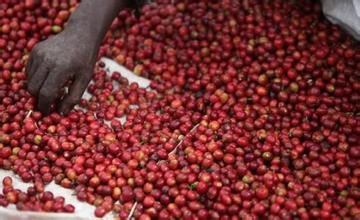
Refreshing, giving people an endless aftertaste of Yemeni coffee flavor, characteristics, taste and manor
Yemeni coffee originated from Arabian coffee trees hundreds of years ago, all produced in areas above 3000 feet above sea level. For hundreds of years, the unique planting and production methods of Yemeni coffee have remained almost unchanged. The seedlings of Yemeni coffee trees are first cultivated in nurseries and then transplanted to high elevations. Pesticides and fertilizers are not used in the breeding process. Mature coffee beans are naturally dried on coffee trees and shelled by stone grinding.
2016-08-30 Refreshing refreshing endless aftertaste Yemen coffee flavor specialty mouth
Sweet Colombia Arabica Flavor Description Grind Variety Description
Colombia coffee varieties are mainly small coffee. Plants are small trees or large shrubs, 5-8 meters high, usually multi-branched at the base; old branches are gray, nodes expand, young branches glabrous, compressed. Leaves thinly leathery, ovate-lanceolate or lanceolate, 6-14 cm long, 3. 5 -5 cm wide, apex long acuminate, acuminate part 10-15 mm long, base cuneate or slightly obtuse, rarely rounded, entire or rounded
2016-10-09 Sweet Colombia Arabica Coffee Flavor Description Ground Variety Region Special
The history of coffee names how did Manning's name come from?
Manning is not the name of the producing area, the place name, the port name, nor the name of the coffee breed. How did it get its name? In fact, it is a phonetic error of the mandheling people in Mandaining, Indonesia. During the Japanese occupation of Indonesia during World War II, a Japanese soldier drank mellow coffee in a cafe, so he asked the shopkeeper the name of the coffee, and the boss mistook him for asking where you were.
2014-10-15 Coffee knowledge coffee history Manning coffee
Introduction to the planting methods of coffee grown in Bourbon, Kenya
The Kenyan coffee variety was first brought to Kenya to be planted in Bourbon bourbon. In the 1950s, through unremitting efforts, the then agricultural research institution Scott Laboratory selected two excellent hybrids, SL-28 and SL-34, subverting the long-standing prejudice that artificial breeding varieties are not excellent natural varieties. SL-28 and SL-34 help Kenyan coffee
2016-06-27 Kenya bourbon planting coffee way introduction treatment
Catimor Katim (Katim)
Catimor: an important variety of commercial beans at present. East Timor was colonized by Portugal for 400 years, and the Portuguese had long been in contact with East Timorese coffee trees. In 1959, the Portuguese moved the Brazilian bourbon mutant Kadura to East Timor and interbred with Tim, who was of Robusta origin, and succeeded in breeding Kadim with strong disease resistance and super production capacity. Nineteen seven ○ to nineteen
2014-06-30 Katim coffee beans boutique coffee beans individual coffee
Yemeni Moha Coffee the latest introduction of Yemeni coffee Yemeni coffee has a unique flavor
Yemeni coffee originated from Arabian coffee trees hundreds of years ago, all of which are produced in areas above 3000 feet above sea level. For hundreds of years, the unique planting and production methods of Yemeni coffee have remained almost unchanged. The seedlings of Yemeni coffee trees are first cultivated in nurseries and then transplanted to high elevations. Pesticides and fertilizers are not used in the breeding process. Mature coffee beans are naturally dried on coffee trees and shelled by stone mill.
2015-11-29 Yemen Moha Coffee latest introduction Flavor unique from
The Origin of the name of Manning Coffee introduction to the History of Indonesian Manning Coffee
The name is edited Manning is not the name of the producing area, the place name, the port name, nor the name of the coffee breed. How did its name come from? In fact, it is the transliteration of the mandheling people in Mandaining, Indonesia. During the Japanese occupation of Indonesia during World War II, a Japanese soldier
2021-11-16 Mante coffee name origin editor not district name
Can coffee suppress sexual impulses?
It is a favorite drink for abstinent monks because of the loss of sexual ability. Under this concept, it is worth noting that the first cafe in London was able to open around 1688. Britons at that time may be more afraid of being manipulated by sexual desire than contemporary fear of losing their sexual ability. Max Weber wrote in Protestant Ethics and the Spirit of Capitalism: Puritans (
2014-08-05 Coffee can suppress impulse lose ability abstinence monk like drink
A brief Analysis of other kinds of Yemeni Coffee
Isimarie: 1800'2 above sea level, ⒛ 0 meters above sea level, located in Bani Ismaili, the higher Ismail Highland in the Salzi producing area southwest of Matari, the breed is called Isimarie. Beans are a little more round than Matari (note that they are different from each other), but Isemary has the same flavor of Harald, Ponzi seems to be higher than Matari, and even has aromas of cardamom, tobacco and sunwood. Shallow
2015-10-22 Brief Analysis Yemen Coffee other species Isis Mary altitude
Species morphology of Colombian coffee-flavored coffee
The main varieties of Colombian coffee are small grains of coffee. Plants are small trees or large shrubs, 5-8 m tall, usually much branched at base; old branches gray-white, nodes dilated, young branches glabrous, compressed. Leaves thinly leathery, ovate-lanceolate or lanceolate, 6-14 cm long and 3.5-5 cm wide, tip long acuminate, acuminate part 10-15 mm long, base cuneate or slightly obtuse, rarely rounded, entire or
2016-06-05 Columbia Coffee Flavor species Morphology varieties Major
How did Manning, a common sense of coffee culture, get his name?
Manning is not the name of the producing area, the place name, the port name, nor the name of the coffee breed. How did it get its name? In fact, it is a phonetic error of the mandheling people in Mandaining, Indonesia. During the Japanese occupation of Indonesia during World War II, a Japanese soldier drank mellow coffee in a cafe, so he asked the shopkeeper the name of the coffee, and the boss mistook him for asking where you were.
2015-05-13 Coffee culture common sense Mant name how come not district name land
The Source of Manning Coffee the common sense of fine coffee beans
Gold Mantenin, the Japanese adopted more stringent quality control more than a decade ago. After picking beans manually for four times, they eliminated defective beans and produced gold mantenin with dark green color and equal appearance of beans, creating another wave of market demand. Even Europe and the United States are crazy about it. Manning is not the name of the producing area, the place name, the port name, nor the name of the coffee breed. How did it get its name? actually
2015-03-13 Mante coffee source boutique coffee beans common sense gold mante Japanese ten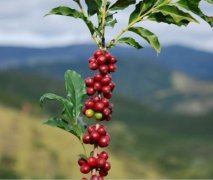
Manning Coffee introduction Manning Coffee Flavor Manning Coffee characteristics Manning Coffee taste
Gold Mantenin, the Japanese adopted more stringent quality control more than a decade ago. After picking beans manually for four times, they eliminated defective beans and produced gold mantenin with dark green color and equal appearance of beans, creating another wave of market demand. Even Europe and the United States are crazy about it. Manning is not the name of the producing area, the place name, the port name, nor the name of the coffee breed. How did it get its name? actually
2016-03-23 Mante coffee introduction flavor characteristics taste gold mante Japanese more than ten